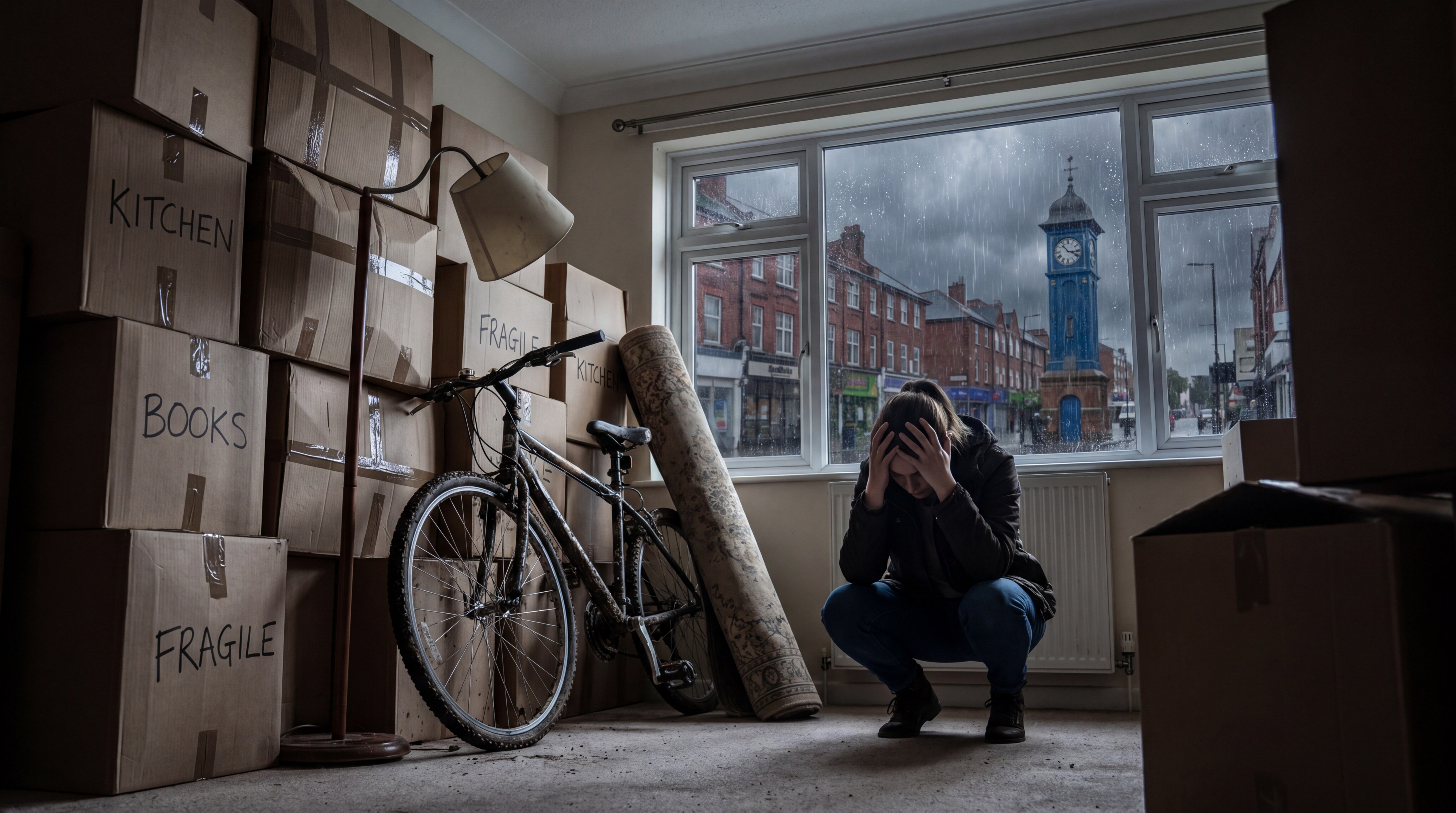
Most people buy too few moving boxes, make an emergency trip to the supermarket halfway through packing, and still somehow end up with fifteen boxes left over at the other end.
The honest answer to how many boxes you need is not a single number. It depends on your property size, how much you have stored away, and which types of boxes you choose. This guide covers all three.
Box Estimates by Property Size
These figures are based on a fully furnished home with a normal amount of stored items. If you have a loft packed full, a garage, or a large collection of books or crockery, add 20% to your estimate.
| Property Size | Estimated Boxes | With 15% Buffer |
|---|---|---|
| Studio / 1-bed flat | 20 to 30 | 23 to 35 |
| 2-bed flat or house | 35 to 50 | 40 to 58 |
| 3-bed house | 55 to 75 | 63 to 86 |
| 4-bed house | 80 to 100 | 92 to 115 |
| 5-bed house | 100 to 130 | 115 to 150 |
Always order 15% more than you think you need. Excess boxes from most suppliers are fully returnable. A second delivery on moving week is not.
The Four Box Types You Actually Need
Not all moving boxes are the same. Using the wrong box for the wrong item is how things break or backs go out.
Small boxes (around 1.5 cu ft)
Use these for heavy items: books, records, tools, crockery, tins, and anything that weighs more than it looks. A small box packed with books should be liftable by one person without straining. If it is not, split the load.
Medium boxes (around 3 cu ft)
The workhorse of any move. Kitchen appliances, toys, pantry items, bathroom cabinets, and general household clutter all go here. Most of your boxes will be mediums.
Large boxes (around 4.5 cu ft)
Reserve these for light, bulky items only: bedding, cushions, pillows, lampshades, and duvets. Never fill a large box with heavy items. It will either break or injure whoever carries it.
Wardrobe boxes
These are tall, have a hanging rail inside, and are essential for suits, dresses, and anything you do not want to fold and crease. Budget for at least one wardrobe box per adult's hanging clothes. Most households need two to four.
One often-overlooked box type: the dish pack box. These have double-thick walls and cell dividers, and they are the only sensible way to move fragile crockery, wine glasses, and ornaments without wrapping every individual item in newspaper.
Where to Get Moving Boxes in the UK
- Supermarkets — Waitrose, Tesco, and Sainsbury's often have spare boxes. Ask at the customer service desk, ideally early in the morning after a delivery.
- IKEA — large flat-pack boxes, free to take. Best for big items but not ideal for stacking.
- Gumtree and Facebook Marketplace — people who have just moved sell or give away their boxes. Good for reducing cost but quality varies.
- Specialist removal suppliers — companies like Rajapack, WBC, or your removal company directly. Higher quality, consistent sizing, and usually returnable if unused.
Free boxes are tempting but carry a risk. A supermarket banana box that has been through the cold room is weaker than it looks. For fragile items or heavy items, buy purpose-made boxes.
The Mistake Most People Make
The most common packing mistake is not running out of boxes. It is buying boxes without doing a proper room-by-room count first.
You end up with thirty medium boxes and nothing suitable for your hanging clothes, your crockery, or the large pile of bedding in the spare room. Then you improvise, and improvisation on moving day is expensive.
The fix is to walk through each room before you order anything and make a rough count of what you are packing. This also forces you to think about what you are actually taking, which is the best time to decide what goes to the charity shop.
"This is exactly what MovePrep AI calculates for you. Film your rooms and the AI identifies every item, calculates the volume, and produces a room-by-room box shopping list. It tells you how many of each box type you need, so you order once and get it right."
Does the Box Count Affect My Removal Quote?
Yes, indirectly. Removal companies price by volume, not by box count. But the number of boxes you have is one of the inputs that makes up your total volume.
A company that asks for your volume data before quoting will include your boxes in the calculation. A company that does not ask is guessing, and guesses often become surcharges on moving day. Read more about why removal companies need your volume list.
Get your exact box list in 3 minutes
Film your rooms on your phone. Our AI identifies every item and tells you exactly how many boxes you need, by type, by room. Free for smaller homes.
Get my free box list →Takes 3 minutes. Free for studios and 1-bed homes. No credit card needed.
Common Questions
How many moving boxes do I need for a 2-bed flat?
A 2-bedroom flat typically requires between 35 and 50 standard boxes, plus 2 to 4 wardrobe boxes for hanging clothes. Add a 15% buffer to account for bathroom cupboards, awkward items, and anything you discover at the back of shelves.
How many boxes do I need to move a 3-bedroom house?
A 3-bedroom house usually needs between 55 and 75 standard boxes, or 63 to 86 with the recommended 15% buffer. The actual figure varies considerably based on your loft, garage, and how much crockery and books you own.
What size moving boxes should I buy?
Use small boxes for heavy items like books and crockery. Medium boxes are best for kitchen appliances and general clutter. Large boxes are for light, bulky items like bedding and cushions only. Wardrobe boxes are essential for hanging clothes. Never fill a large box with heavy items.
Where can I get free moving boxes in the UK?
Supermarkets (Waitrose, Tesco, Sainsbury's), IKEA, Gumtree, and Facebook Marketplace all have free or very cheap boxes. For fragile or heavy items, it is worth buying purpose-made boxes from a removal supplier rather than relying on second-hand ones.
Is it better to buy or hire moving boxes?
Buying is cheaper upfront but you need to dispose of boxes afterwards. Hiring plastic crates costs more but they are stronger, stackable, and collected once the move is done. For most standard moves, mid-range cardboard boxes bought new and recycled afterwards are the most practical option.
How do I get an accurate box count for my specific home?
Walk through each room and count items before you order. Better still, use MovePrep AI: film your rooms in about 3 minutes, and the AI produces a room-by-room box list based on your actual belongings rather than a property-size estimate. It is free for smaller homes.